By – Sarman Nagele
MPPOST
Bhopal : Saturday, April 26, 2026,
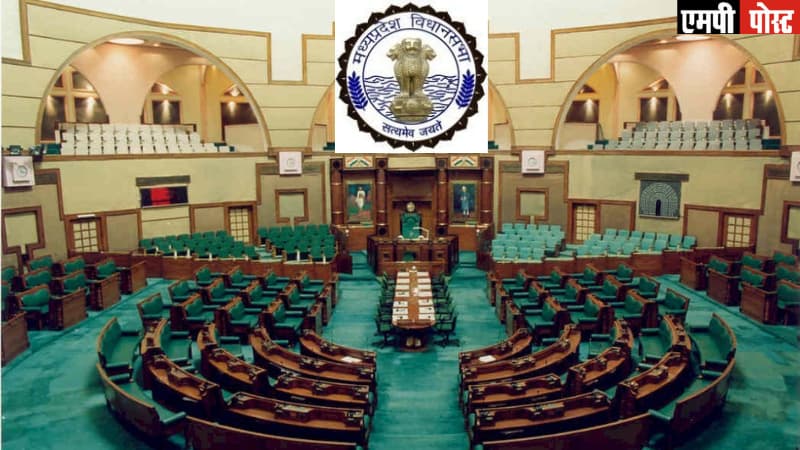
The presence of 27 women MLAs in the 16th Legislative Assembly of Madhya Pradesh is not merely a statistic of electoral victories – it is the story of 27 struggles that, through sheer resilience, erased the distance between ‘the threshold of home’ and ‘the seat of the House.
This session’s assembly has been adorned with a bouquet of women’s power – encompassing everything from daily-wage labourers to the traditions of former royal families, from the fire of youth to the vision of seasoned experience. From the warmth of the hearth to the doorstep of the House: Madhya Pradesh’s politics is witnessing a new era of ‘motherly compassion’ and ‘strength.’
The 27 ‘Honourable’ women who sit in the current Madhya Pradesh Legislative Assembly hold not just the right to frame policies – they carry the hopes of millions of women who still consider politics a distant dream. This session’s ‘Nari Shakti’ presents a unique confluence of sensitivity and firm administrative decision-making.
The Greatest Inspiration of Struggle: Sampatiya Uike
When Sampatiya Uike (BJP) rises in the House, she is not merely a Cabinet Minister – she is the symbol of an indomitable courage that once sustained itself through daily-wage labour. Her journey from a labourer to a Rajya Sabha member and now a Cabinet Minister illustrates how profoundly strong leadership born from the soil of struggle can be.
Krishna Gaur:
Krishna Gaur (BJP), who registered a historic victory of 1.06 lakh votes from the Govindpura seat in the state capital, proved what women’s determination can achieve.
The Fire of Youth: Priyanka Penchi :
31-year-old Priyanka Penchi (BJP) is the youngest face of this Legislative Assembly. By defeating Laxman Singh – a five-time Member of Parliament and a formidable political veteran – in Chachoda, she delivered the message that the daughters of modern India now possess the mettle to bring down even the mightiest political fortresses.
The Maturity of Experience: Nirmala Bhuria and Anubha Munjare:
While Nirmala Bhuria (BJP) brings the weighty experience of five consecutive victories into the House to champion tribal interests, Anubha Munjare (Congress) proved her fighting spirit by defeating a powerful minister in Balaghat.
Leadership of the ‘Half Population’: Total Women MLAs: 27 (21 BJP, 6 Congress)
Smt. Meena Singh is the most senior among women MLAs. A total of 27 women legislators have been elected to the Sixteenth Legislative Assembly. Among them, Smt. Meena Singh Mandwe (Manpur) is the most senior, having become a member of the House for the sixth time. After her stands Kumari Nirmala Bhuria (Petlawad), who has been elected for the fifth time.
Meanwhile, Mrs. Sumitra, Kavita Patidar, and Mrs. Maya Vikramsingh Narolia are gracing the Rajya Sabha with their presence. Mrs. Savitri Thakur, Minister of State in the Ministry of Women and Child Development (Government of India), is diligently safeguarding the interests of women; concurrently, Mrs. Lata Bankhede, Himandri Singh, and Mrs. Sandhya Rai stand tall in the Lok Sabha as the voice of women and of Madhya Pradesh.
Governance with Sensitivity:
This is the first time that women’s stature has also risen in the administrative reins of the state. While 17 districts are being commanded by women Collectors, these 27 women in the House stand like a wall – not merely doing politics, but prioritising public service with the warmth of human relationships.
This form of the Madhya Pradesh Legislative Assembly signals that politics and administration are no longer exclusively a man’s arena – here, the future of the state is now being written through the perspective of ‘daughter, sister and mother.’ 17 Collectors and one Commissioner are also serving in key positions.
Complete Governance of the Half Population:
For the First Time in Madhya Pradesh, 17 ‘Lady Collectors’ Hold Command of Districts
The women Collectors posted across 17 districts of Madhya Pradesh are – Khargone: Ms. Bhavya Mittal; Barwani: Smt. Jayati Singh; Alirajpur: Smt. Neetu Mathur; Ratlam: Ms. Misha Singh; Shajapur: Ms. Riju Bafna; Agar Malwa: Smt. Preeti Yadav; Mandsaur: Ms. Aditi Garg; Gwalior: Smt. Ruchika Chauhan; Sheopur: Ms. Sheela Dahima; Maihar: Smt. Bidisha Mukherjee; Umaria: Smt. Rakhi Sahay; Sagar: Smt. Pratibha Pal; Panna: Smt. Usha Parmar; Niwari: Smt. Jamuna Bhide; Narsinghpur: Smt. Rajni Singh; Seoni: Smt. Neha Meena; Dindori: Smt. Anju Pawan Bhadauria. In addition, Smt. Surabhi Gupta is serving as the Divisional Commissioner of Shahdol Division.
A historic transformation is unfolding in the administrative framework of Madhya Pradesh, where during Chief Minister Dr. Mohan Yadav’s tenure, women’s power has received unprecedented momentum. It is for the first time in the state’s history that the command of 17 districts has been entrusted to women Collectors.
Madhya Pradesh’s administrative system is now passing through a new era of ‘compassion’ and ‘strength.’ The state government, with the objective of bringing transparency and efficiency to administration, has assigned the responsibility of 17 important districts to experienced women IAS officers.
Chief Minister Dr. Mohan Yadav believes that women accomplish any task with greater responsibility, transparency and swiftness. At present, 17 out of the state’s 55 districts are being led by women – a number that was limited to merely 3 to 4 before the Chief Minister assumed office. Additionally, recently retired Chief Secretary Veera Rana also set a benchmark as the administrative head of the state.
Historical Inspiration and Future Vision:
Chief Minister Dr. Mohan Yadav regards the reigns of Rani Durgavati and Devi Ahilyabai Holkar as role models for his administrative vision. This is precisely why women’s stature has grown not only in governance but also in the administrative sphere. While 5 women ministers in the government -Sampatiya Uike, Nirmala Bhuria, Krishna Gaur, Pratima Bagri and Radha Singh – are taking policy decisions, these women Collectors are strengthening governance at the grassroots level. Indications are also emerging that after districts, women will soon be seen occupying the Commissioner’s chair in several divisions as well.
This transformation is becoming not merely a symbol of women’s participation in Madhya Pradesh’s politics and administration, but the hallmark of their decisive leadership.